
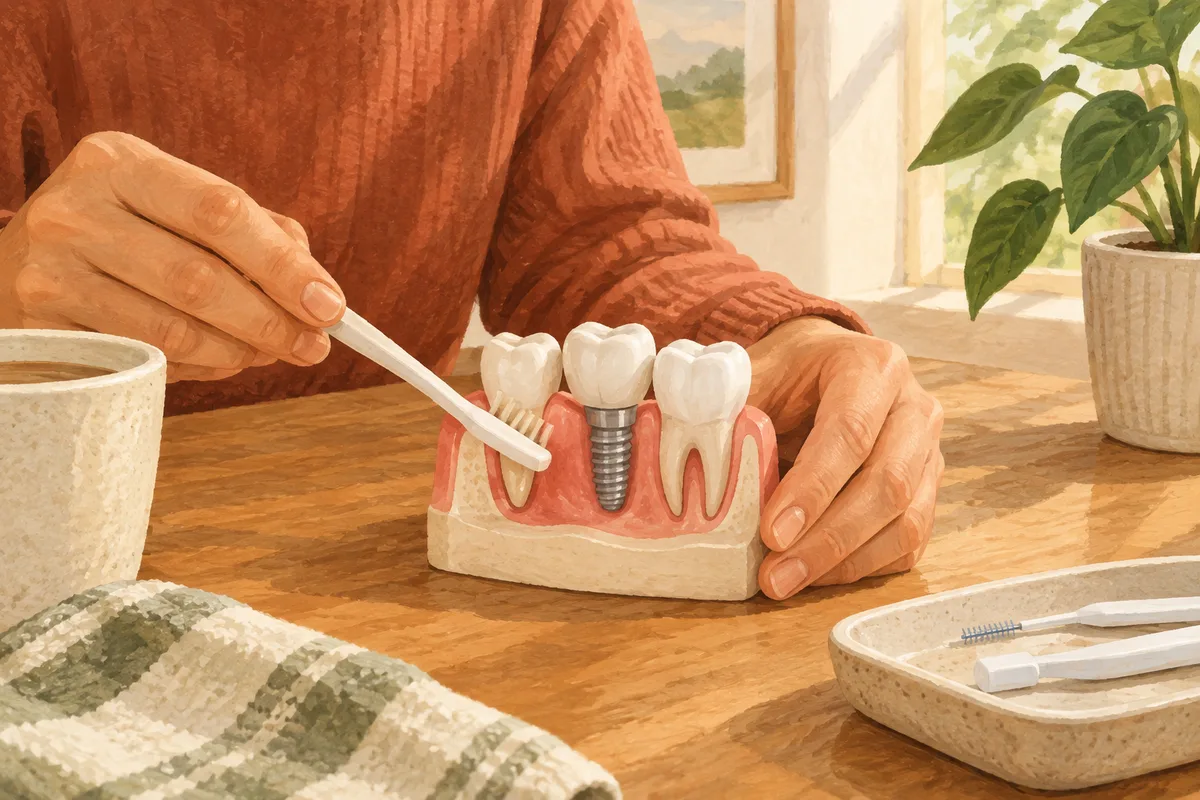
Dental Implants Can’t Get Cavities, but Their Supporting Tissues Can Get Sick
A dental implant cannot develop a cavity the way a natural tooth can. The implant and the replacement tooth attached to it are made from materials that do not decay. But that does not make the area around an implant immune to disease. The gums and bone that hold it in place still need daily care and professional attention.
Inflammation around an implant may start with subtle changes, such as bleeding during brushing or gums that look redder than usual. These signs do not tell the whole story on their own, but they deserve attention. Understanding what can happen around an implant can help you recognize when something needs a closer look.
How the Tissues Around an Implant Can Become Inflamed
Plaque is a sticky film of bacteria that collects on teeth, implant restorations, and along the gumline. When it stays in place, it can irritate the nearby gums. Plaque can also harden into tartar, which cannot be removed with brushing alone.
Inflammation limited to the soft tissue around an implant is called peri-implant mucositis. The gums may become swollen, tender, or prone to bleeding. At this stage, there is no bone loss from the condition. Professional care and improved plaque control can often help bring the inflammation under control.
Peri-implantitis involves inflammation along with loss of the bone supporting the implant. This is a more serious problem and may require more involved treatment. A dental exam is needed to tell the difference; the way an implant looks or feels at home is not enough.
What Affects an Implant’s Long-Term Health?
Daily cleaning and regular dental visits play important roles in implant health. Even when the replacement tooth looks clean, plaque can remain near the gumline or in spaces that are hard to reach. The shape and fit of a restoration can also affect how easily someone can clean around it.
A history of gum disease can increase the risk of inflammation around implants. Smoking and poorly controlled diabetes can also affect the tissues’ ability to stay healthy and heal. These factors do not mean a problem is certain, but they are useful for the dental team to know when planning care.
Mechanical problems matter, too. A loose component or a change in how the teeth meet can affect comfort and function. These issues are not the same as infection, but they still need assessment. An implant’s long-term health depends on both its supporting tissues and the parts attached to it.
Bleeding and Other Changes Worth Checking
Bleeding during brushing or cleaning between teeth should not be dismissed as normal just because an implant cannot get a cavity. Other changes worth reporting include redness, swelling, gum recession, a persistent bad taste, discharge, or discomfort when chewing.
Inflammation around an implant does not always cause pain. An implant may feel comfortable even when changes are happening beneath the gumline. Waiting for soreness can delay finding a problem that a dental exam might detect earlier.
A replacement tooth that feels loose also deserves prompt assessment. The cause could involve an attached component rather than the implant itself, but that cannot be determined at home. Rapidly increasing swelling, fever, or trouble swallowing calls for urgent professional attention.
Keeping Implant Care Practical
Implant care is not about scrubbing harder. It is about cleaning effectively without injuring the gums. A dental professional can explain which brushes or between-teeth cleaning tools suit a particular restoration. The right approach may differ from the routine used for natural teeth.
At dental visits, the team may check the gums, measure around the implant, assess the restoration, and take X-rays when needed. Comparing findings over time can help reveal changes that are not obvious in the mirror. Visit timing should reflect a person’s needs rather than a single schedule for everyone.
Silverlake Dental Group provides family and specialty dental care in Silver Lake, Los Angeles. If you have personal questions about bleeding, cleaning, or a change around an implant, contact the office for guidance. The main takeaway is simple: an implant cannot decay, but its supporting tissues still need attention.
Questions about your own care? The team at Silverlake Dental Group is happy to help — call us at (323) 922-6016 or request an appointment.
This content is for general information only and isn't dental or medical advice. Talk with your dentist or orthodontist about your own situation. If you have a medical emergency, call 911.