
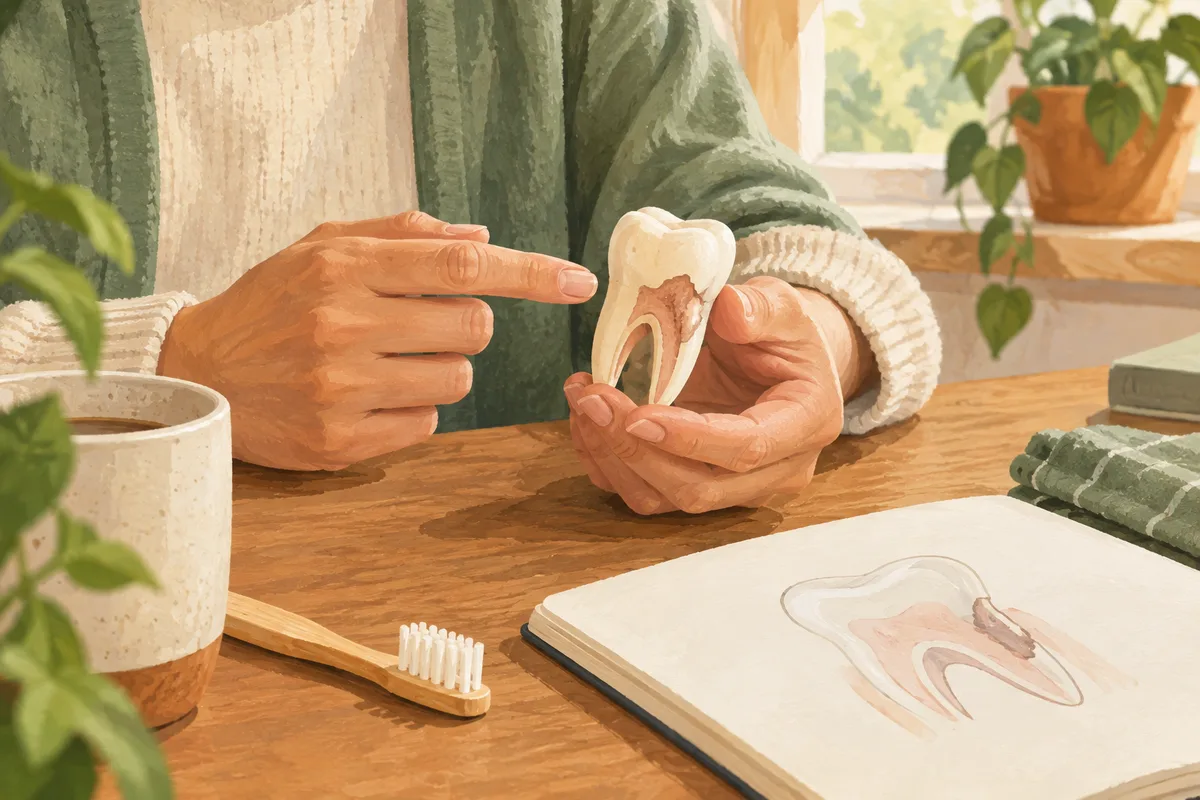
Tooth Resorption: When the Body Starts Breaking Down a Tooth
A tooth may look normal and feel fine even while changes are happening beneath its surface. Tooth resorption is one of those changes. It happens when cells in the body begin breaking down and removing parts of a tooth, rather than leaving its hard structure intact.
Resorption is a normal part of losing baby teeth: their roots gradually dissolve so the teeth can fall out. In permanent teeth, though, this process can damage a tooth’s root or inner walls. Understanding where it starts helps explain why some cases need treatment while others may be watched.
Internal and External Resorption: What Is the Difference?
Internal resorption starts inside the tooth, along the space that holds the pulp. The pulp is soft tissue containing nerves and blood vessels. When certain cells become active in this space, they can break down the surrounding dentin, the hard layer beneath the enamel. The inside of the tooth may gradually widen in the affected area.
External resorption starts on the tooth’s outer surface, often along the root. It can occur near the gumline, along the side of a root, or at the root tip. Some forms cause a small amount of root shortening. Others can spread into deeper parts of the tooth.
These are broad categories, not single conditions with one cause. A past injury, inflammation, pressure from a nearby tooth, or certain dental treatments can play a role. Sometimes no clear cause is found. Resorption is different from a cavity, which develops when acids produced by bacteria damage tooth structure.
Why Resorption Can Be Silent
Early resorption may not irritate the tooth’s nerves or cause an infection. Damage can also occur below the gumline, where it cannot be seen during everyday brushing. That means a person may have no pain, sensitivity, or visible warning signs.
When symptoms do appear, they may include discomfort, swelling, a change in tooth color, or a tooth that feels loose. Certain cases near the gumline can create a pinkish area on the tooth. None of these signs confirms resorption on its own; several other dental problems can look or feel similar.
Dental X-rays may reveal changes before symptoms develop. A dentist considers those images alongside an examination and the tooth’s history. Additional images from different angles, or sometimes a three-dimensional scan, may help clarify the location and extent of damage when that information would affect care.
How Location Shapes Treatment Decisions
The key question is not simply whether resorption is present. A dentist also needs to know where it began, how far it has spread, whether it is still active, and how much sound tooth structure remains. Damage confined to one area can require a very different approach from damage that extends through a root.
For internal resorption, root canal treatment is often considered to remove the tissue supporting the process. If the damage has created an opening through the tooth’s outer wall, repair may also be needed. The size and position of that opening can make treatment more complex.
External resorption has several possible treatment paths. An accessible defect near the gumline may be cleaned and repaired. In other cases, care focuses on an underlying source of inflammation or pressure. Root canal treatment is not automatically needed for every external defect, but it may be part of care if the pulp is affected. Some stable changes can be monitored; extensive damage may make a tooth difficult to keep.
Understanding a Finding Without Assuming the Worst
Hearing that the body is breaking down part of a tooth can sound alarming. Still, the word “resorption” alone does not tell you how serious a case is. Useful questions include whether the change is internal or external, whether older X-rays show progression, and what monitoring or treatment is meant to accomplish.
Silverlake Dental Group provides family and specialty dental care in Silver Lake, Los Angeles. For patients and families, learning the difference between normal baby-tooth root loss and changes in permanent teeth can make dental findings easier to understand.
Brushing and cleaning between teeth remain important, but they cannot reverse resorption. Regular dental visits can provide opportunities to spot changes that are not visible at home. If you have personal questions about symptoms or an X-ray finding, call your dental office for guidance based on an examination rather than trying to identify the condition yourself.
Questions about your own care? The team at Silverlake Dental Group is happy to help — call us at 323-922-6016 or request an appointment.
This content is for general information only and isn't dental or medical advice. Talk with your dentist or orthodontist about your own situation. If you have a medical emergency, call 911.